
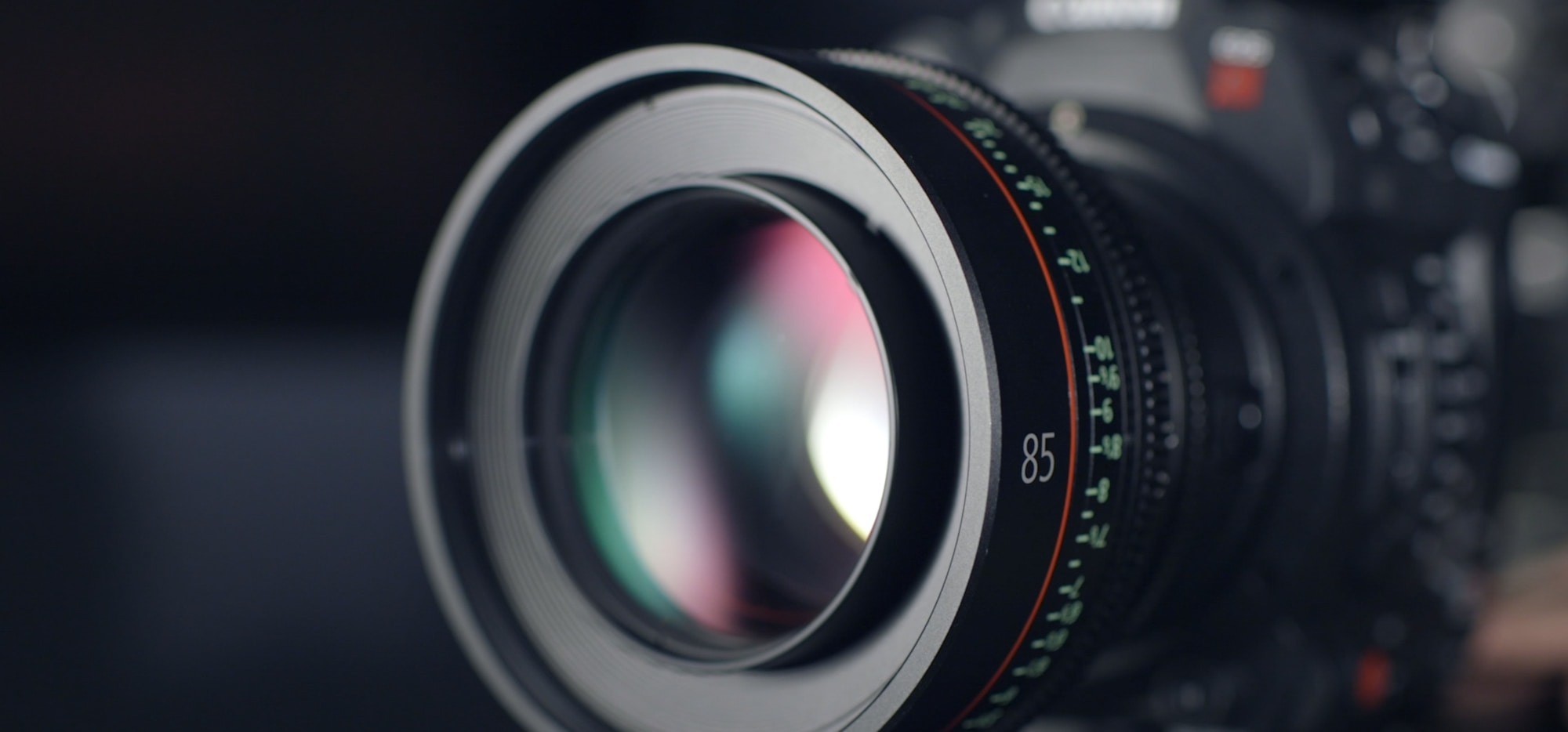
A cinematographer’s relationship with lenses is fundamentally different from a photographer’s. You’re not freezing a moment — you’re building a world in motion. The lens you choose doesn’t just frame the shot; it defines the visual grammar of the entire film. Its breathing, its bokeh character, the way it renders skin, how it flares against a practical light — all of it is felt by the audience, even when they can’t name what they’re seeing.
Choosing your first serious lens as a cinematographer means thinking about consistency across a scene, T-stops versus f-stops, focus throw, and the texture of the image — not just sharpness. This guide walks you through everything you need to know before spending your money.
1. Cine Lenses vs Photo Lenses — What’s Actually Different
The first decision most cinematographers face isn’t prime versus zoom — it’s whether to invest in dedicated cinema lenses or use photo (still) lenses adapted for video. Both work. But they’re built for different workflows.
Cinema Lenses: Built for moving images
Declicked aperture rings, gear teeth for follow focus, consistent T-stop markings, minimal focus breathing, longer focus throw for precise rack focuses. Built for a crew.
Photo Lenses: Adapted for video
Cheaper entry point, wider selection, often optically excellent. Clicked aperture, shorter focus throw, possible focus breathing. Great for solo operators and run-and-gun work.
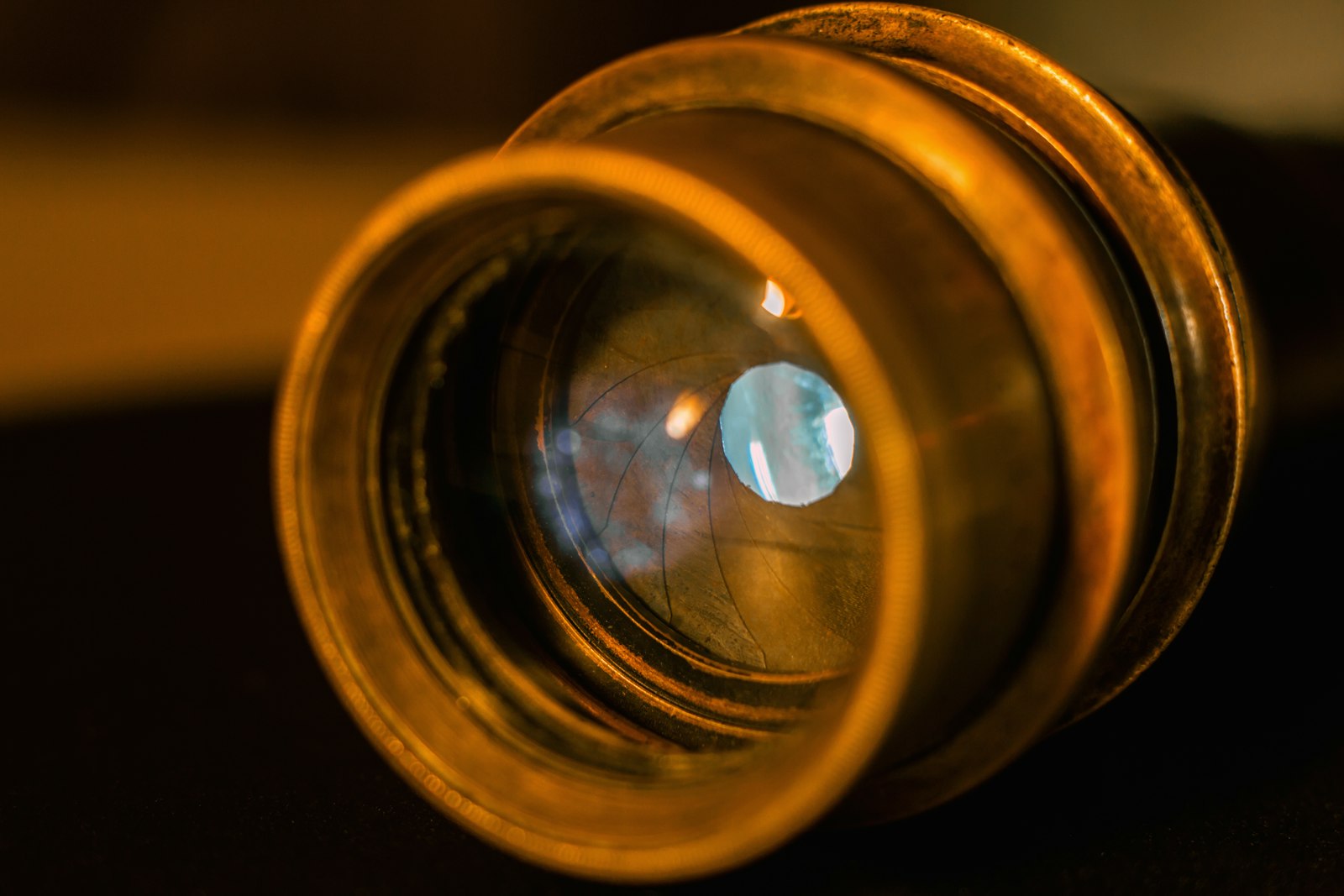
Vintage Glass: Character over clinical
Helios, Zeiss Contax, Super Takumars — older glass with organic rendering, swirly or painterly bokeh, natural imperfections that add texture to the image. Beloved by DPs worldwide.
Anamorphic: Widescreen character
Oval bokeh, horizontal lens flares, the cinematic 2.39:1 look without cropping. A whole conversation on its own — but worth knowing exists from day one.
For most cinematographers starting out, photo lenses on a cinema body is the sweet spot. You get excellent optics, wide apertures for shallow depth of field, and significant cost savings. As your workflow becomes more crew-based and you’re pulling focus on a rig, the investment in dedicated cine glass makes much more sense.
“T-stops are measured light transmission — f-stops are calculated geometry. Two lenses marked f/2 can transmit noticeably different amounts of light. For matching shots across a set, T-stops are what you actually trust.”
2. Prime vs Zoom — The Cinematographer’s Version
In cinematography, the prime versus zoom debate carries extra weight. Consistency between lenses matters enormously — a set of primes that match in color rendering, contrast, and bokeh character creates visual cohesion across a film. Switching between mismatched lenses mid-film can feel jarring in a way most viewers feel but can’t articulate.
Prime Lenses: Fixed focal length
+ Wider maximum aperture — shallower depth of field, separation from background
+ Consistent image quality and rendering across a matched set
+ Lighter on the front of a gimbal or rig
+ Minimal focus breathing (especially on cine primes)
+ Forces intentional camera placement and blocking decisions
– Lens swaps slow down fast-moving productions
– Building a full set is a significant investment
– Less flexible for run-and-gun or documentary work
Best for: narrative film, music videos, controlled sets, visual storytelling with a specific look
Zoom Lenses: Variable focal length
+ Reframe without moving the camera — essential for documentary and live events
+ One lens covers a full shooting day for solo operators
+ Fast zooms (f/2.8 constant) are genuinely cinema-capable
+ The zoom push is its own cinematographic tool — a motivated move with intention
– Heavier — affects gimbal balance and handheld feel
– Narrower max aperture at the budget end
– More optical compromises across the focal range
– Lazy zooming in post is not a replacement for composition
Best for: documentary, ENG, events, solo DP work, productions where speed beats perfection
Many working cinematographers carry both. A fast zoom as the workhorse, primes for hero shots where image quality and shallow depth of field are paramount. The 24–70mm or 28–75mm zoom handles the majority of coverage; a fast 50mm or 85mm prime closes out the day with the shots that matter most.

3. Focal Lengths — How They Shape the Frame and the Feeling
In cinematography, focal length is an emotional tool as much as a technical one. Wide lenses place characters inside their environment — they feel small, exposed, part of a larger world. Longer lenses compress that world — the character fills the frame, the background presses close, everything feels more claustrophobic or intimate depending on context.
These are not subtle effects. Watch any Kubrick film and notice how he uses wide lenses to make characters feel dwarfed by their surroundings. Watch a Roger Deakins close-up and notice how the slightly longer focal length renders a face with weight and dignity. These choices are deliberate, repeatable, and learnable.
14–24mm: Ultra Wide
Establishing shots, environments that dwarf characters, action sequences with kinetic energy, claustrophobic spaces made expansive
28–35mm: Wide Normal
The “documentary” focal length. Feels natural, slightly immersive. Great for walking scenes, two-shots, environmental dialogue
40–50mm: Standard
Closest to human vision. Coverage lens for dialogue, inserts, cutaways. The workhorse of narrative filmmaking across every era
75–85mm: Short Tele
The portrait focal length for cinema. Close-ups with beautiful compression. Isolates faces. Backgrounds become impressionistic
100–135mm: Telephoto
Extreme compression. Background merges with subject. Crowd scenes feel dense. Surveillance-like quality — great for tension or voyeurism
Sensor size changes everything
On a Super 35 / APS-C sensor, a 50mm behaves closer to a 75–80mm equivalent. On a Micro Four Thirds body, it behaves like a 100mm. Always think in terms of the equivalent full-frame field of view when planning your coverage. Most professional cinematographers eventually move toward full-frame or large-format sensors specifically because wide lenses behave as intended — a 24mm actually looks like a 24mm.
4. What to Actually Buy First
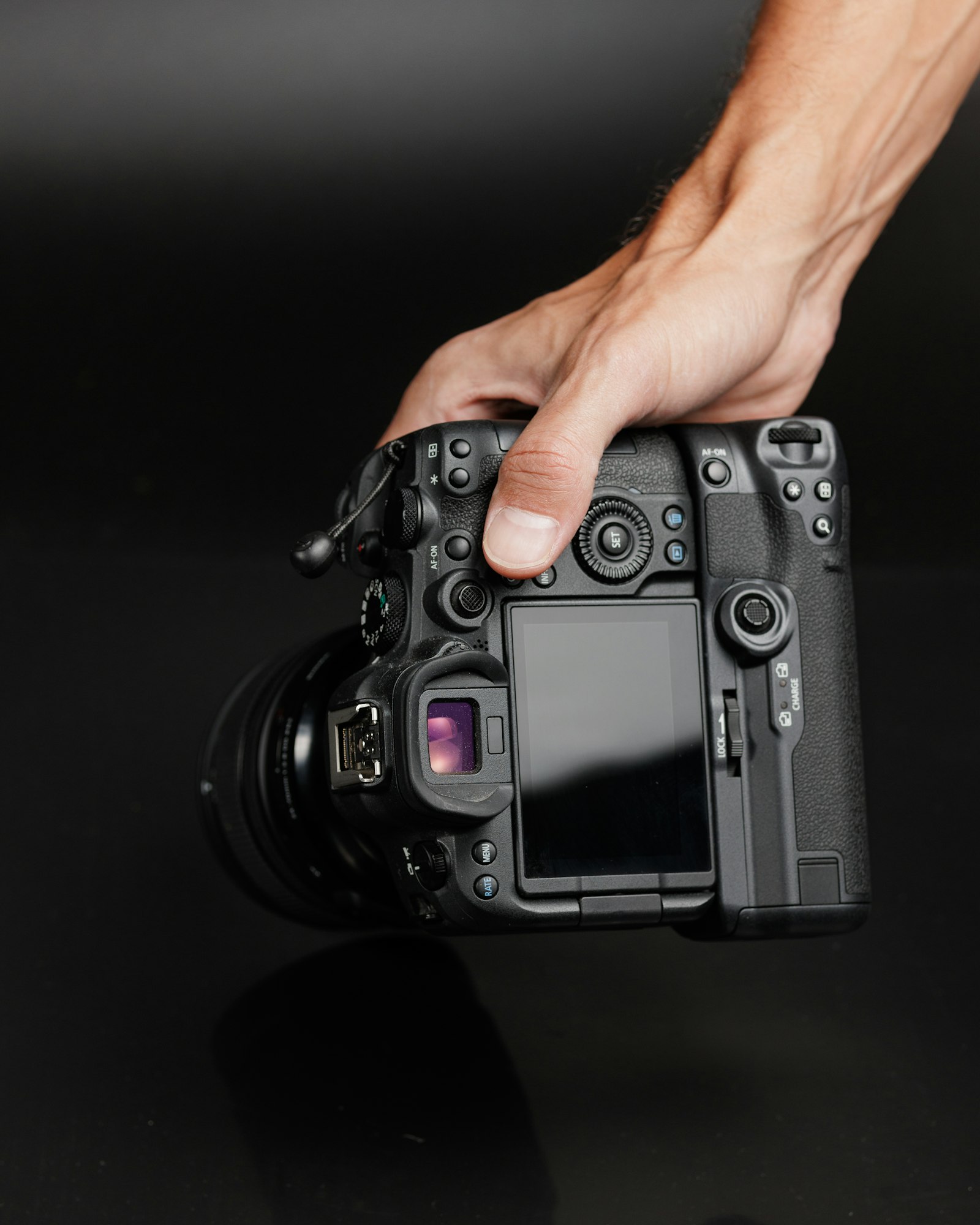
For most cinematographers starting to build their kit, a fast 35mm or 50mm prime in the T1.5–T2 range is the most versatile first lens. On a Super 35 body the 35mm gives you a natural, slightly wide look that covers dialogue, environment, and close-ups with one lens. On full-frame, the 50mm sits at the neutral center of the focal range. Either choice gives you shallow depth of field capability, manageable size for gimbal and handheld work, and a forcing function: you learn the frame by committing to a single perspective.
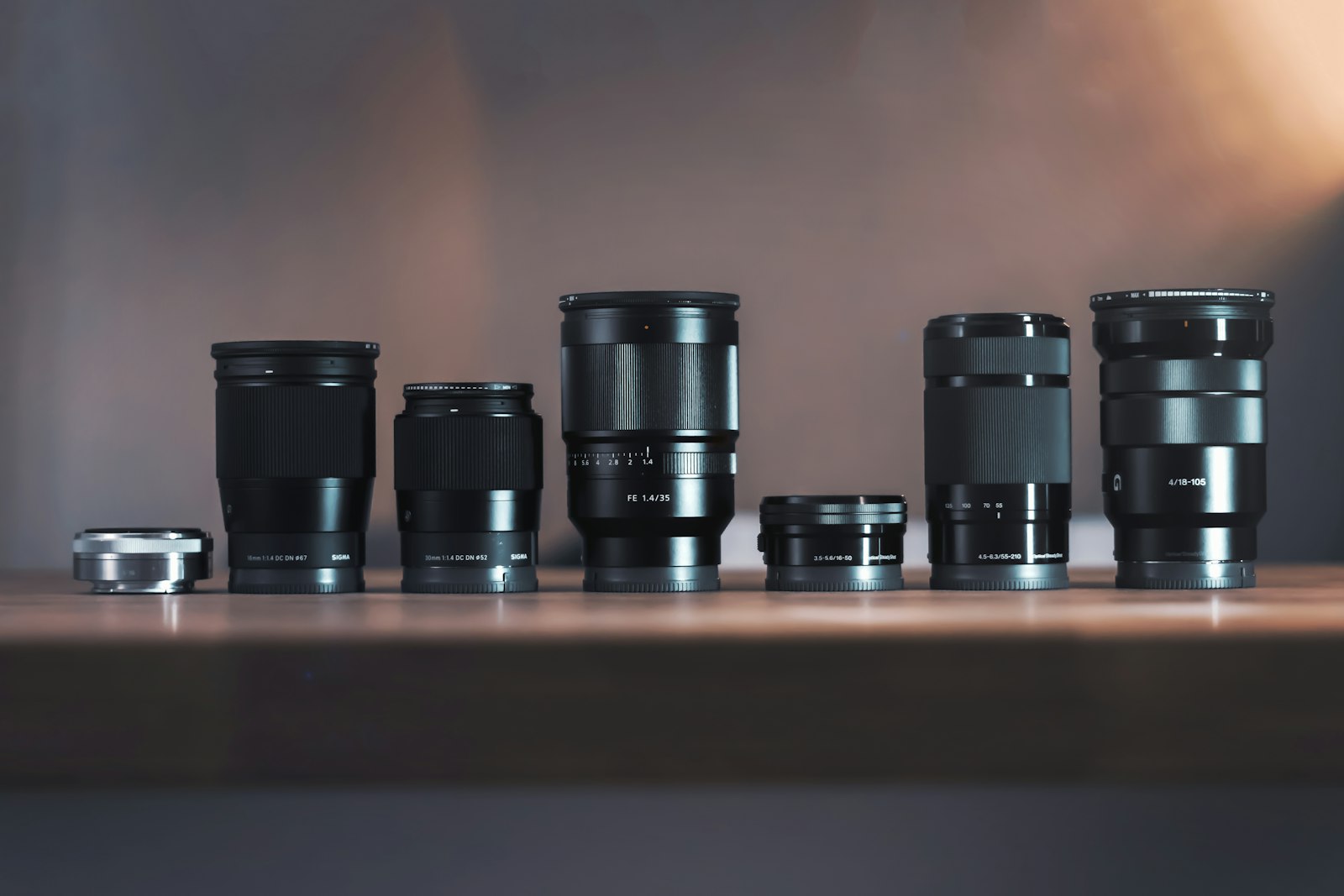
5. The Mistake Most Cinematographers Make Early On
Buying a mismatched collection of lenses from different manufacturers and eras, then wondering why the film feels visually inconsistent. A 50mm Rokinon next to a Canon 35mm next to a vintage Nikon 85mm will all render color, contrast, and bokeh differently. In a feature film or even a short that cuts between them, the difference is felt — a subtle incoherence that audiences sense but can’t identify.
“Build a set, not a collection. Three lenses that match each other are worth more than five lenses that don’t.”
The goal is a set — lenses from the same family that share a visual DNA. This doesn’t mean expensive. A set of Rokinon/Samyang cine primes (24mm, 35mm, 50mm, 85mm) can be had for under $1,500 total and they match beautifully. Sigma Art primes are optically excellent and render consistently across the range. Vintage glass works too — buy the whole set of Contax Zeiss primes and you have matching character throughout.
Start with one lens. Shoot everything with it. Learn its character intimately — how it flares, where the focus falls off, what happens to bokeh at different distances. Then add a second lens from the same family. Let your kit grow intentionally, driven by what you’re actually being asked to shoot.
The best cinematographers know their glass the way a musician knows their instrument — not just technically, but emotionally. They know what a particular lens does to a face in low light. They know how a wide angle changes the dynamic between two actors in a room. Buy less. Shoot more. The lens that teaches you the most is the one you use until you understand it completely.